 Kotatsu Design & Development Inc.
The Problem
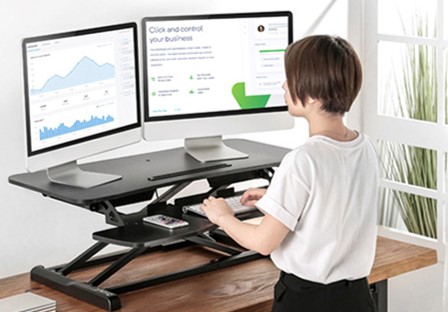
A client approached us with ongoing neck and shoulder pain associated with prolonged desk work. On the recommendation of their company's ergonomics specialist, a commercial sit-stand desk riser was introduced to allow alternating between sitting and standing.
While standing reduced neck strain, it failed to meaningfully relieve shoulder discomfort. After several weeks of use, it became clear that posture alone wasn't addressing the root cause. Conventional standing desks assume that simply changing posture reduces upper-body load; in this case, it merely transferred the strain. The result: a shift in strain rather than a reduction of it.
Key Ergonomic Insight
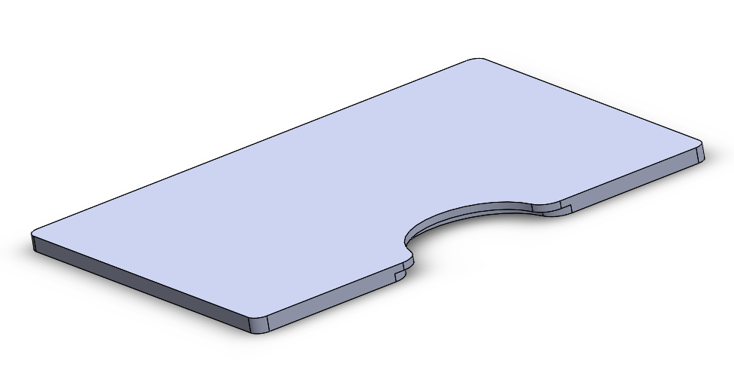
Through on-site measurements and observation, we identified that allowing the user's elbows and forearms to bear weight could significantly reduce shoulder loading. Rather than adding bolt-on armrests or peripheral supports, we explored a fundamental change: allowing the user to stand within the desk geometry so the desktop itself could support the arms naturally and continuously. This led to the “stand-in” cutout integrated directly into the work surface.
Phase 1: Prototype & Validation
To test the “stand-in” geometry without replacing existing hardware, we fabricated a rough prototype and adapted it directly to the client’s commercial sit-stand riser. This “test bed” allowed us to validate the concept with minimal disruption or investment.
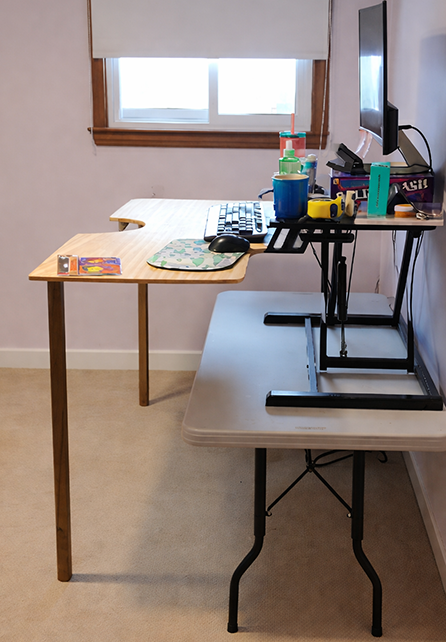
The effect was immediate and noticeable:
- Targeted Support: Elbow and forearm support significantly reduced shoulder loading.
- Pain Relief: Chronic neck and shoulder pain were alleviated through geometry, not gadgets.
- Sustained Productivity: The client was able to work comfortably for extended periods.
Phase 2: Custom Fabrication
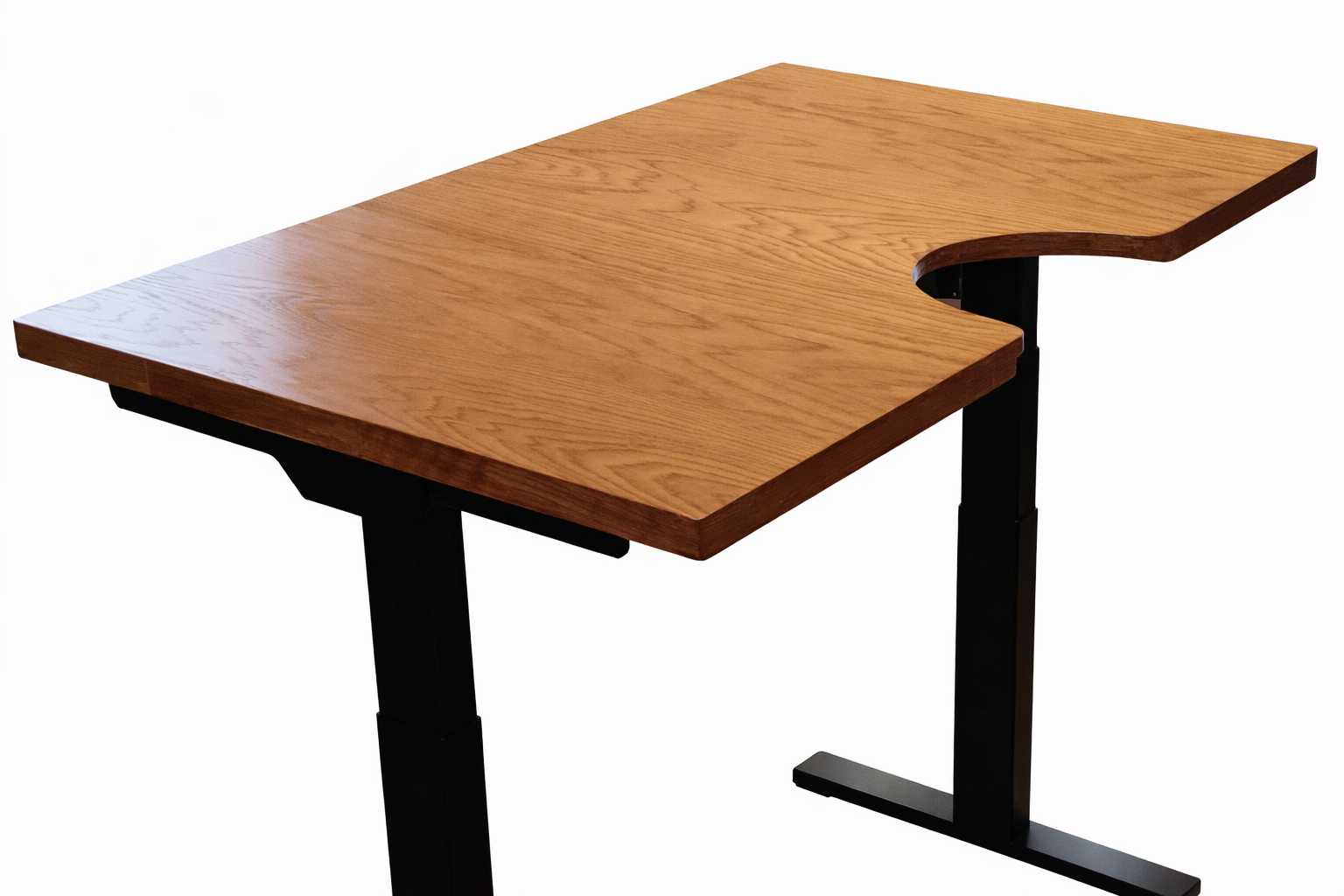
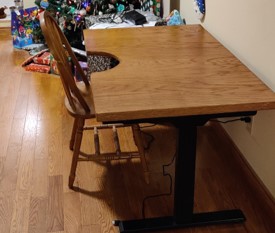
With the concept validated in real daily use, we designed and fabricated a full-scale standing desk incorporating the ergonomic geometry. The desktop was constructed in the client's wood of choice, balancing durability, aesthetics, and comfort. The result was a durable, daily-use solution that required no behavioral change from the user, supporting the client throughout the remainder of the COVID work-from-home period.
Phase 3: Office Deployment
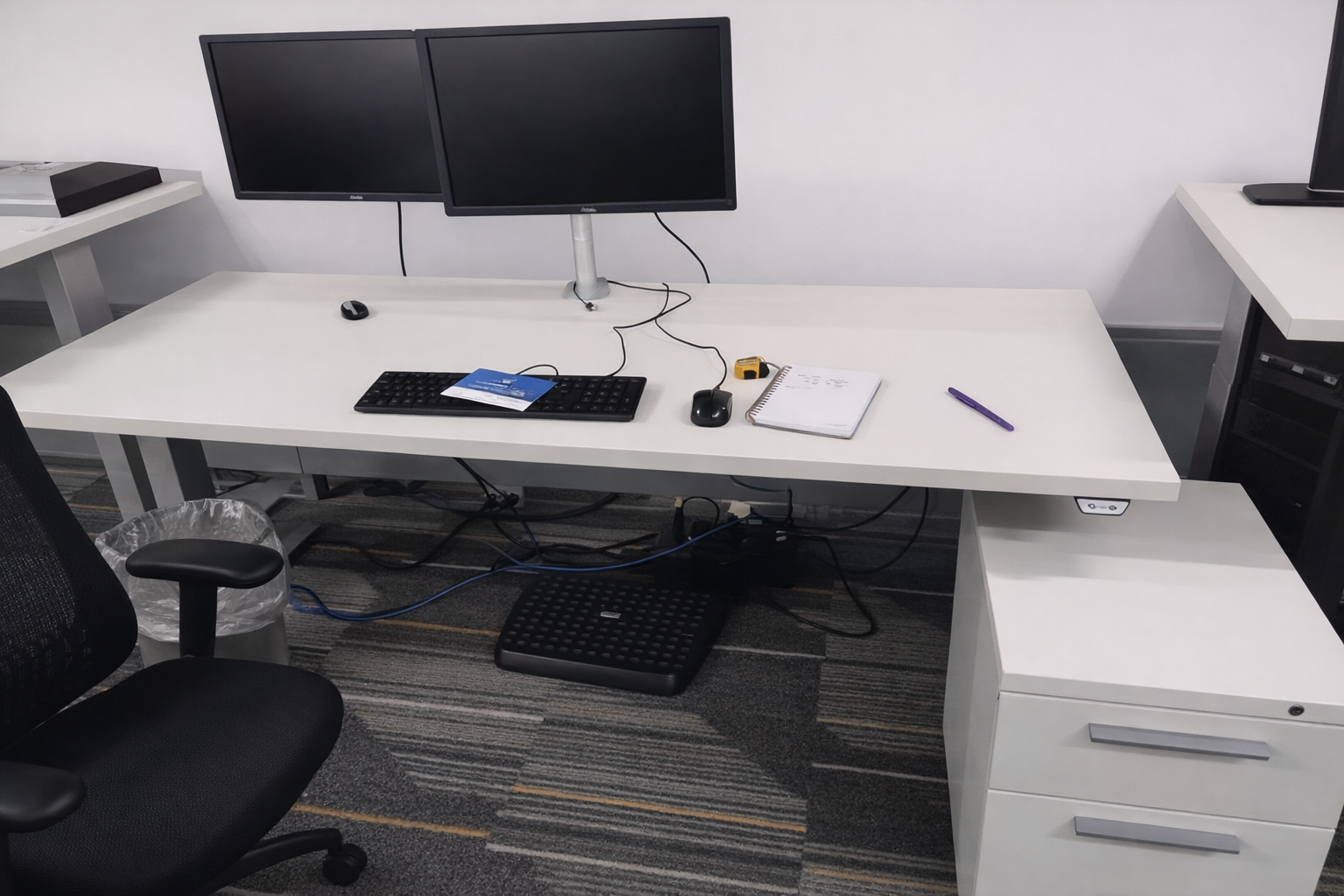
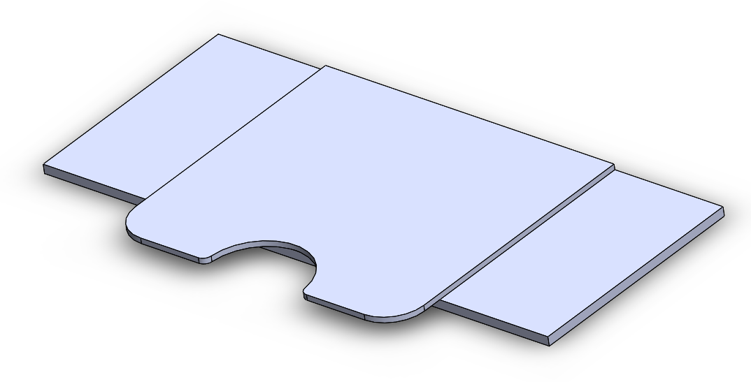
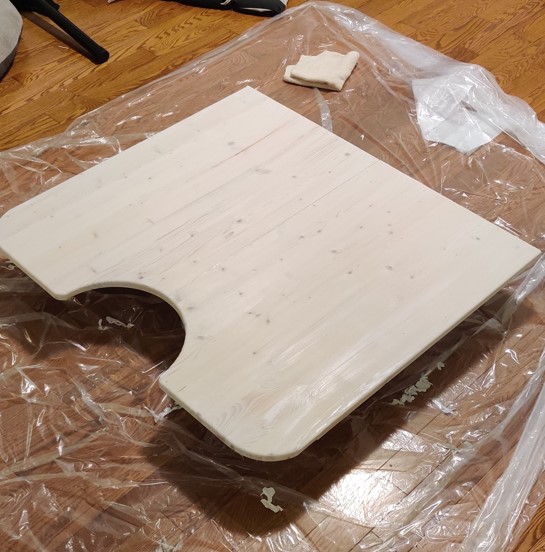
When the client returned to the office, they requested a second iteration to be replicated without replacing existing furniture. We engineered a “desk-topper” version that mounted onto a standard office standing desk:
- Precision Engineering: Existing desk geometry was measured on-site and captured via CAD models.
- Material Selection: Pine was selected for its light weight and ability to accept a white stain to match the corporate environment.
- Seamless Integration: The design provided identical ergonomic benefits in a shared office setting with minimal disruption.
Outcome
By resolving chronic pain through geometry, and validating each step through rapid prototyping and practical engineering, we created a solution that integrated seamlessly into the client's workflow. The project demonstrates human-centered design driven by observation rather than assumptions; the client’s request for a second iteration serves as the strongest indicator of the design's success.